Guide to Building AI-Powered Autonomous Drones
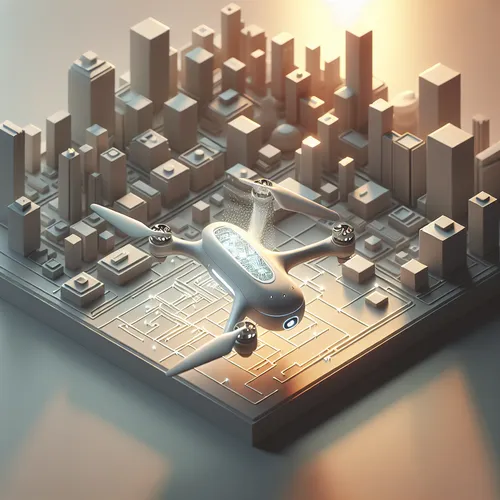
Autonomous drones powered by artificial intelligence (AI) represent the cutting edge of robotics, offering applications ranging from delivery services and aerial photography to environmental monitoring and search-and-rescue missions. This guide will walk you through the key steps involved in building your own AI-powered autonomous drone, suitable for hobbyists and developers eager to explore this fascinating domain.
Prerequisites
- Basic knowledge of Python or C++: You’ll need this for programming the AI models and drone control algorithms.
- Understanding of drone hardware: Familiarity with drone components such as flight controllers, GPS modules, and sensors.
- Access to hardware: A drone frame, flight controller (e.g., Pixhawk or DJI controller), sensors (LIDAR, ultrasonic, camera), and computing hardware like a Raspberry Pi or NVIDIA Jetson for onboard AI processing.
- Software tools: Drone SDKs (such as DJI SDK), AI frameworks like TensorFlow or PyTorch, and simulation environments like Gazebo or AirSim.
Step 1: Setting Up Your Drone Hardware
The foundation of any autonomous drone is robust hardware. Start by assembling the drone frame and installing all critical components:
- Mount the flight controller on the drone frame, connecting it to motors and ESCs (Electronic Speed Controllers).
- Attach sensors such as GPS for positioning, IMUs for motion sensing, and cameras or LIDAR for obstacle detection.
- Connect your onboard computer (e.g., Raspberry Pi) that will host the AI model and control software.
Step 2: Programming Flight Controls and Navigation
Use open-source flight control firmware like ArduPilot or PX4. Develop navigation algorithms that interface with your flight controller and sensors to enable autonomous path planning.
- Integrate GPS waypoint navigation for basic autonomous routes.
- Add sensor fusion algorithms combining IMU, GPS, and obstacle sensors to improve localization and flight stability.
Step 3: Training the AI Model
Autonomy depends on the AI model’s ability to perceive and react to environment challenges:
- Collect training data through simulations (using AirSim) or real flights.
- Train a convolutional neural network (CNN) for object detection to avoid obstacles.
- Implement reinforcement learning for adaptive decision-making based on environmental feedback.
Step 4: Integrating AI with Drone Control
Connect your AI model’s outputs to drone flight commands. For example, use AI to detect obstacles and adjust flight paths in real-time. Utilize ROS (Robot Operating System) for seamless communication between AI processes and drone hardware control.
Step 5: Testing and Troubleshooting
Begin with simulation testing to validate AI and flight control integration without risking hardware damage. Address common issues such as:
- Latency in AI processing causing delayed responses.
- Sensor noise affecting obstacle detection accuracy.
- GPS signal loss and environment changes.
Iterate your algorithms and refine hardware setup to enhance performance.
Additional Tips
- Regularly update flight control firmware for latest stability improvements.
- Leverage community forums and official sources like the ArduPilot project (Official site).
- For advanced AI deployment, consider NVIDIA Jetson platforms for onboard deep learning.
Related Read
For more on integrating AI with cloud and edge computing in robotics, see our Integrating AI with Edge Computing: Future Trends & Guide post.
Summary Checklist
- Gather drone hardware and sensors suitable for AI integration.
- Set up and calibrate flight control and navigation systems.
- Train AI models for object detection and autonomous navigation.
- Integrate AI with real-time drone control software.
- Conduct extensive simulation and real-world testing.
- Troubleshoot latency, sensor, and environmental challenges.
- Continuously optimize both software and hardware components.
Building AI-powered autonomous drones combines mechanical ingenuity, embedded systems programming, and AI expertise. With patience and iteration, you can create drones that navigate and adapt autonomously, opening new horizons in robotics technology.
About the Author