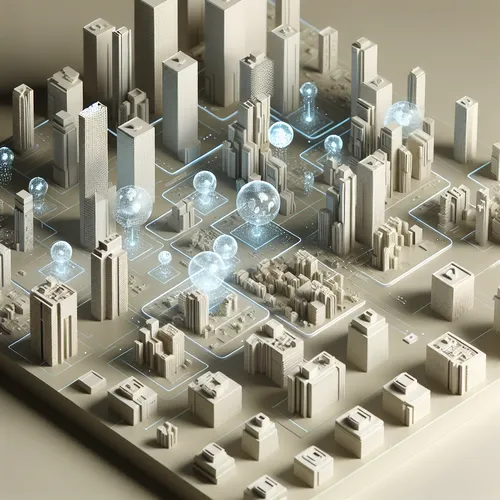
Step-by-Step Guide to Building AI-Powered Digital Twins
Digital twins represent virtual replicas of physical systems that allow businesses to simulate, analyze, and optimize everything from manufacturing lines to smart cities. By integrating artificial intelligence (AI), you can create intelligent digital twins that improve predictions, automate decision-making, and enhance operational efficiency.
What Are AI-Powered Digital Twins?
AI-powered digital twins go beyond static models by using machine learning algorithms and real-time data inputs. They continuously learn from their physical counterparts and predict future states, enabling proactive management and innovation.
Prerequisites
- Basic knowledge of AI and machine learning concepts
- Familiarity with IoT sensors and data collection
- Understanding of cloud computing and data storage
- Programming experience in Python or similar languages
Step 1: Define the Physical System and Objectives
Identify the system to model, whether it’s a factory machine, power grid, or transportation network. Clarify objectives like predictive maintenance, performance optimization, or risk analysis.
Step 2: Collect and Integrate Data
Deploy IoT sensors to collect real-time data. Use historical data to augment your models. Integrate data streams using cloud platforms or edge solutions for low latency.
Step 3: Build the Virtual Model
Create a 3D or mathematical model representing the system. For 3D models, software like Autodesk or Blender can be useful. For process simulations, utilize tools like MATLAB or Simulink.
Step 4: Implement AI Algorithms
Use machine learning to train predictive models on collected data. Common algorithms include regression models, neural networks, and reinforcement learning. Python libraries like TensorFlow and PyTorch can facilitate development.
Step 5: Connect the Digital Twin with the Physical System
Enable bidirectional communication between the physical system and the digital twin. This real-time synchronization ensures your digital twin reflects current conditions accurately.
Step 6: Validate and Test
Compare digital twin outputs with actual system behavior. Adjust models as needed to enhance accuracy. Conduct scenario testing to explore system responses under various conditions.
Troubleshooting Tips
- Inaccurate Predictions: Ensure quality and quantity of data; retrain models regularly.
- Data Latency: Optimize network and edge computing to reduce delays.
- Integration Issues: Use standardized APIs and protocols like MQTT or REST.
- Model Complexity: Balance sophistication with real-time performance needs.
Summary Checklist
- Define the system and goals
- Collect comprehensive data
- Build accurate virtual models
- Implement and train AI models
- Ensure real-time sync with physical system
- Validate and refine continually
For a deeper dive into AI model deployment, explore our detailed post on Deploying AI Models on Edge Devices Efficiently. This will help you understand options for AI inference closer to the data source, enhancing your digital twin’s performance.
Integrating AI into digital twins unlocks powerful new capabilities to transform industries. With this guide, you can start leveraging AI-powered digital twins to enhance decision-making, reduce downtime, and innovate effectively.
For further reading about AI applications in cybersecurity to protect sensitive infrastructure that digital twins manage, see our guide on Getting Started with AI-Powered Cybersecurity Automation.
To learn more about foundational AI concepts and best development practices, visit IBM Digital Twin Overview (Official site).
About the Author