
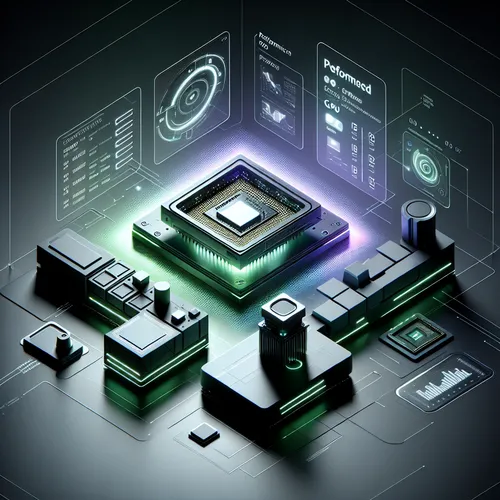
NVIDIA Announces RTX 50-Series GPUs: Pricing and Performance Leaks
NVIDIA is gearing up to release its next-generation RTX 50-Series graphics cards, and the tech community is buzzing with leaked information regarding their pricing and performance capabilities. This tutorial provides an in-depth look at the rumored specs, expected performance improvements, pricing strategy, and what potential buyers should consider before purchasing.
Prerequisites
- Basic understanding of graphics cards and GPU terminology
- Familiarity with previous NVIDIA RTX series (30 and 40 series)
- Interest in PC hardware upgrades or gaming technology
Step 1: Overview of NVIDIA RTX 50-Series GPUs
The RTX 50-Series is NVIDIA’s anticipated lineup succeeding the highly successful 40-Series. Built on an advanced semiconductor architecture with new GPU cores, these cards aim to deliver significant improvements in ray tracing, AI-powered rendering, and overall gaming and professional workloads.
- Architecture: Rumored to feature the new ‘Lovelace 2.0’ or ‘Ada Next’ architecture.
- VRAM: Expected to sport larger and faster GDDR7 memory modules for better bandwidth and efficiency.
- AI & Ray Tracing Cores: Enhanced to provide more realistic lighting and faster AI inferencing.
Step 2: Performance Expectations
Leaked benchmark data suggests significant performance boosts compared to the 40-Series:
- Up to 30-40% increase in rasterization performance for gaming.
- 50% or more gains in ray tracing performance due to next-gen RT cores.
- Improved power efficiency, resulting in better thermals and quieter operation.
- Enhanced AI features support for DLSS 3.5 or newer iterations.
Real-world tests, when available, should confirm these figures, but early leaks set high expectations.
Step 3: Pricing Leaks and Market Strategy
The pricing information leaked so far indicates:
- The flagship RTX 5090 could be priced around $1,399 to $1,499 USD, slightly higher than its predecessor due to increased capabilities.
- Mid-range models like RTX 5070 and 5060 might start between $499 and $799 USD.
- Entry-level 50-Series variants could be positioned aggressively to compete with AMD’s latest offerings.
This pricing strategy aligns with NVIDIA’s goal to capture a wide range of users from enthusiasts and professionals to mainstream gamers.
Step 4: What This Means for Gamers and Professionals
With these upgrades, RTX 50-Series GPUs could revolutionize gaming experiences and accelerate professional tasks such as AI modeling, 3D rendering, and video editing.
- Gamers can expect ultra-high frame rates at 4K resolutions with ray tracing activated.
- Content creators will benefit from improved CUDA core performance and AI acceleration.
- Enhanced support for VR and ray-traced applications makes the series future-proof.
Step 5: Troubleshooting Buying Decisions
- Wait for official benchmarks: Leaks provide early insight but are not final.
- Consider your use case: Higher-end models offer maximum performance, but mid and entry-level cards often deliver the best value.
- Factor power and cooling: New GPUs may require upgraded power supplies and better cooling solutions.
- Compare with AMD and Intel GPUs: Always evaluate competitor products for better deals or features.
Summary Checklist
- Understand RTX 50-Series rumored architectures and specs.
- Review leaked performance benchmarks cautiously.
- Keep an eye on pricing leaks to budget your purchase.
- Evaluate your PC setup for compatibility and power needs.
- Stay updated with official NVIDIA announcements and reviews for final details.
For a comprehensive guide on related tech and setup, consider our post on top automation tools for businesses to explore boosting efficiency beyond just hardware upgrades.
Conclusion
The NVIDIA RTX 50-Series GPUs promise to push the envelope in graphics performance and AI integration for 2025. While leaks provide exciting glimpses, the cautious approach includes awaiting official tests and announcements. Whether upgrading your gaming rig or powering professional workloads, the 50-Series could be a formidable choice when it launches.
About the Author